

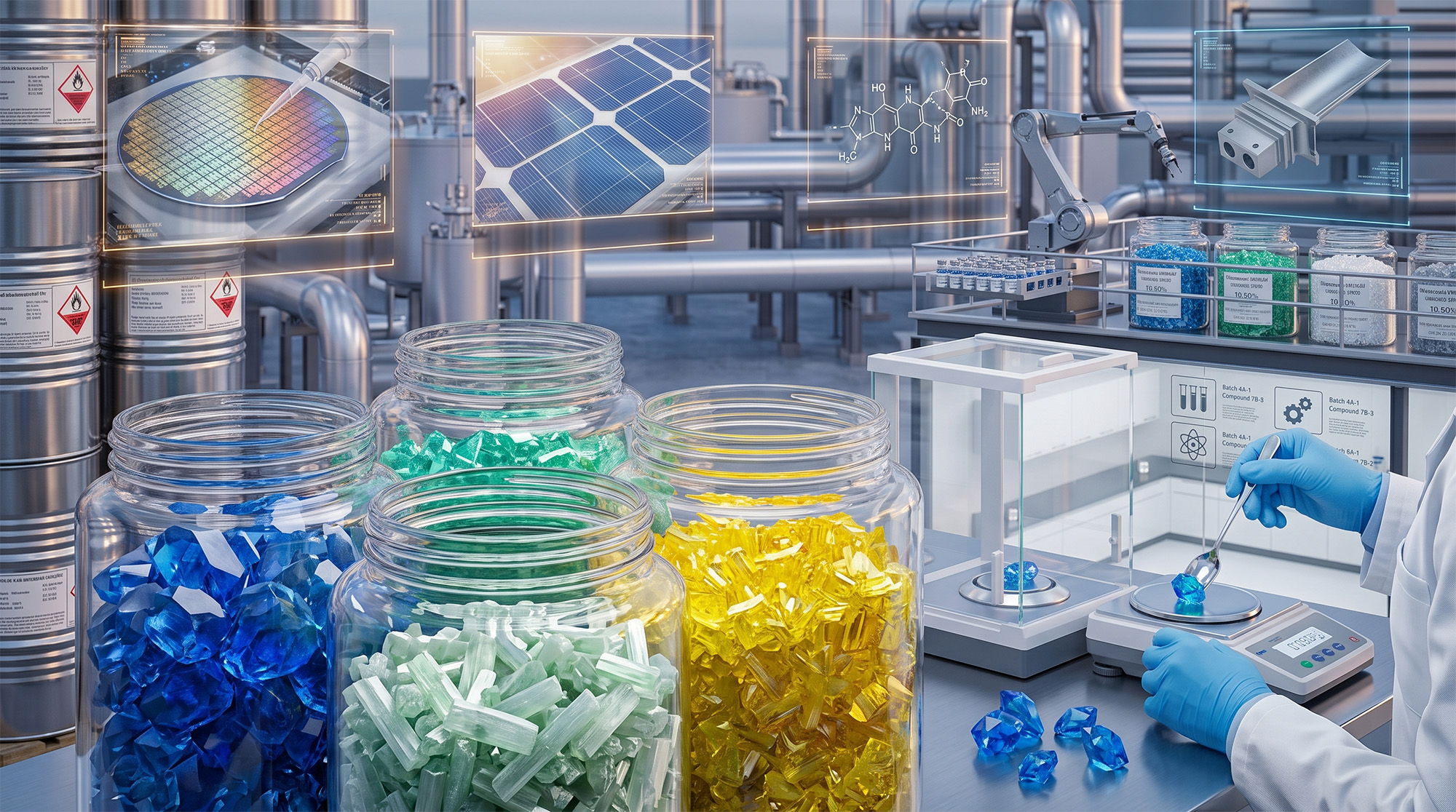
Why High-Purity Metallic Salts Are Essential for Modern Industries
In today’s precision-driven industrial environment, the quality of raw materials directly influences manufacturing performance, product consistency, and operational efficiency. Industries are no longer focused only on large-scale production — they also require accuracy, reliability, and stable chemical performance at every stage of manufacturing.
This has significantly increased the demand for high-purity metallic salts across sectors. From EV batteries and electroplating to catalysts, ceramics, pigments, and these specialty chemicals play a critical role in maintaining product quality and process efficiency across modern industries.
In many industrial processes today, the quality of a chemical input can directly influence the quality of the final product. Even trace-level impurities may affect conductivity, coating adhesion, reaction stability, colour consistency, or equipment efficiency. For manufacturers operating in highly competitive markets, maintaining this level of consistency has become critical rather than optional.This is where high-purity metallic salts play an important role.
What Are High-Purity Metallic Salts?
High-purity metallic salts are specialized chemical compounds manufactured with extremely low impurity levels to ensure stable industrial performance. These compounds are commonly derived from metals such as:
Their purity directly impacts the efficiency, durability, and consistency of downstream manufacturing processes. They are widely used in industrial manufacturing because of their unique chemical and physical properties. Depending on the application, these salts are used for their conductivity, catalytic behaviour, thermal stability, or chemical reactivity.
However, not all metallic salts offer the same level of performance. Industrial applications that demand precision require chemicals manufactured under controlled processes to maintain consistent composition and minimize impurities. High-purity metallic salts are specifically processed to minimise contamination and maintain batch-to-batch consistency, which is essential for modern manufacturing environments.
Some widely used industrial metallic salts include:
Each of these compounds serves a different purpose depending on the industry and process involved.
Why High Purity Matters in Industrial Applications
Better Process Stability
In large-scale manufacturing environments, inconsistent raw materials can create production problems that are difficult and expensive to control.
Impurities in metallic salts may result in:
In electroplating, for instance, inconsistent chemical purity may lead to uneven metal deposition, weak adhesion, or surface finish defects. In battery manufacturing, impurities in metallic salts may impact energy density, cycle life, and overall battery life.
This is why manufacturers increasingly prefer suppliers with strong process control and consistent batch-to-batch quality.
Improved Product Quality and Performance
Modern industries rely heavily on precision and repeatability. Whether the end product is a battery component, coated metal surface, ceramic material, or catalyst, manufacturers need consistent results from batch to batch.
Variations in chemical composition can disrupt production processes, increase rejection rates, and create operational inefficiencies.
These advantages become especially important in export-oriented industries where product quality standards are closely monitored.
High-purity metallic salts help industries maintain:
This becomes important in large-scale manufacturing environments where process stability directly impacts productivity and cost efficiency.
Reduced Production Losses
Impurities in industrial chemicals can lead to equipment issues, inconsistent reactions, and material wastage. High-purity metallic salts help minimize these risks by delivering predictable and reliable chemical performance.
Manufacturers often find that maintaining consistent raw material quality reduces troubleshooting efforts across the production cycle. Reliable chemical performance not only improves efficiency but also helps avoid unnecessary production losses.
Compliance With Global Quality Standards
As international markets become more quality-conscious, manufacturers are under increasing pressure to comply with global regulatory and environmental standards. Industries supplying international markets are expected to maintain strict quality and compliance standards.
High-purity specialty chemicals manufactured under certified systems help businesses meet regulatory requirements and customer expectations.Industries today prefer suppliers that can offer consistent purity levels, proper documentation, and reliable manufacturing practices.
Industries That Depend on High-Purity Metallic Salts
Demand for high-purity metallic salts has increased steadily over the last decade due to the expansion of high-performance manufacturing sectors.
Some major industries using these specialty chemicals include:
The rapid growth of electric vehicles, renewable energy technologies, and advanced material applications has further increased the demand for high-performance metallic salts worldwide.
Conclusion
High-purity metallic salts play an important role in modern industrial manufacturing. From improving process stability to supporting product consistency and reducing operational losses, these specialty chemicals contribute directly to manufacturingp erformance across multiple industries.
As industrial manufacturing becomes more advanced and quality-focused, the demand for high-purity metallic salts continues to grow.
With decades of industry expertise and a strong global presence, Eastmen Chemicals Private Limited continues to supply high-purity metallic salts to industries worldwide, supporting manufacturers with dependable quality, technical consistency, and export-grade specialty chemical solutions.